Symbiogenesis – the hidden model of evolution
Apr 20, 2020
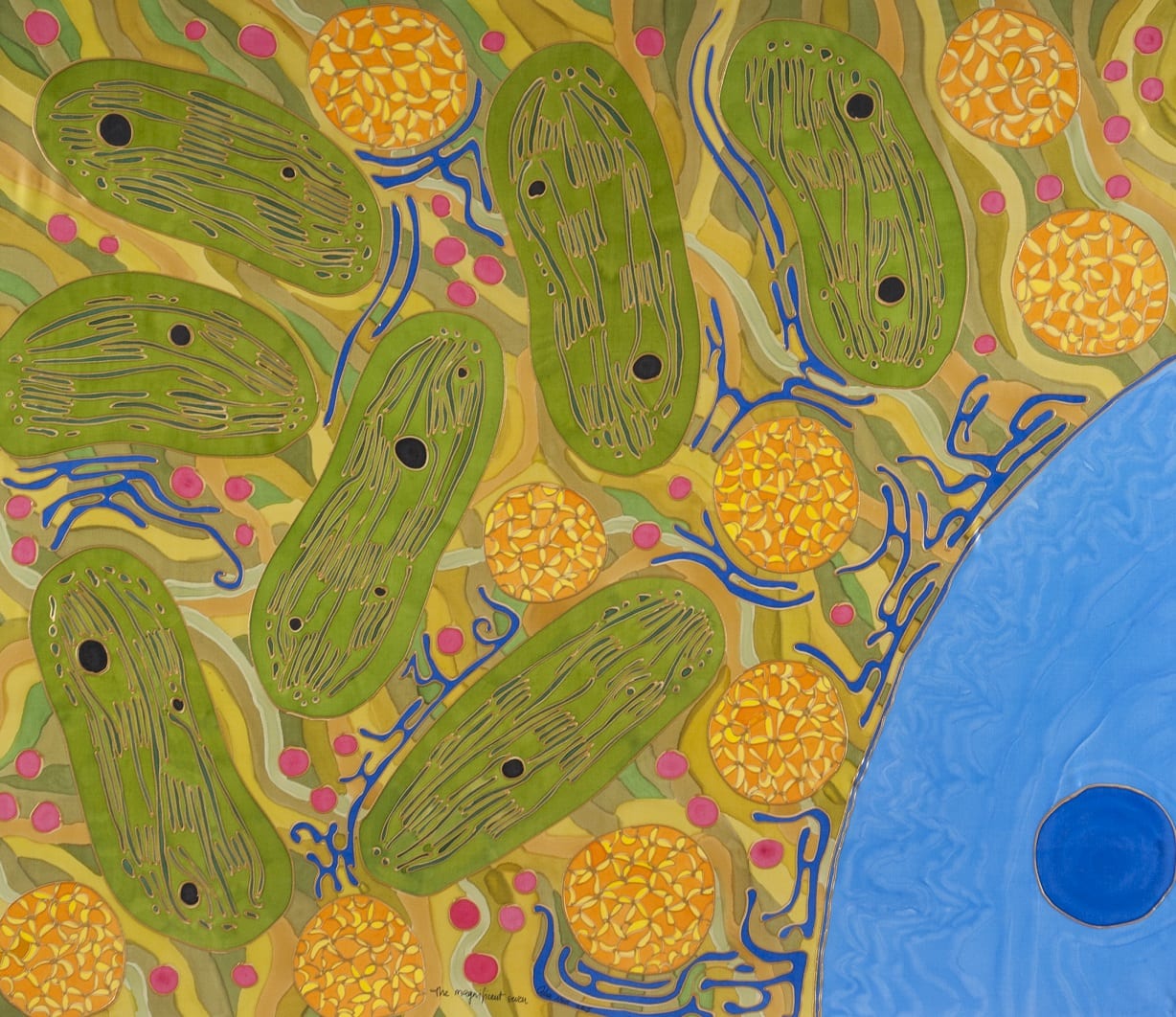
Have you ever considered that an organelle in your cell is alive, sentient and self-motivated? Or is of bacterial origin? Considering that organelles could be independent units of bacterial origin was a game changer for me.
The theory of endosymbiosis is widely accepted and understood to be how eukaryotic cells were formed. Mitochondria were an imposter bacteria which occupied ancient eukaryotic cells. This alien invader formed an alliance with the invaded internal ecosystem and over time began producing energy for the cell. If mitochondria were originally foreign intruders making themselves at home in alien cells, what’s the origin story for the other organelles?
I’ve been banging this drum for a while but it really is bacteria all the way down!
Let’s trace the evidence of organelles acting as independent players during their long historical timeline.
Mitochondria
One of the few things we learned from school is that the mitochondrion is the powerhouse of the cell.
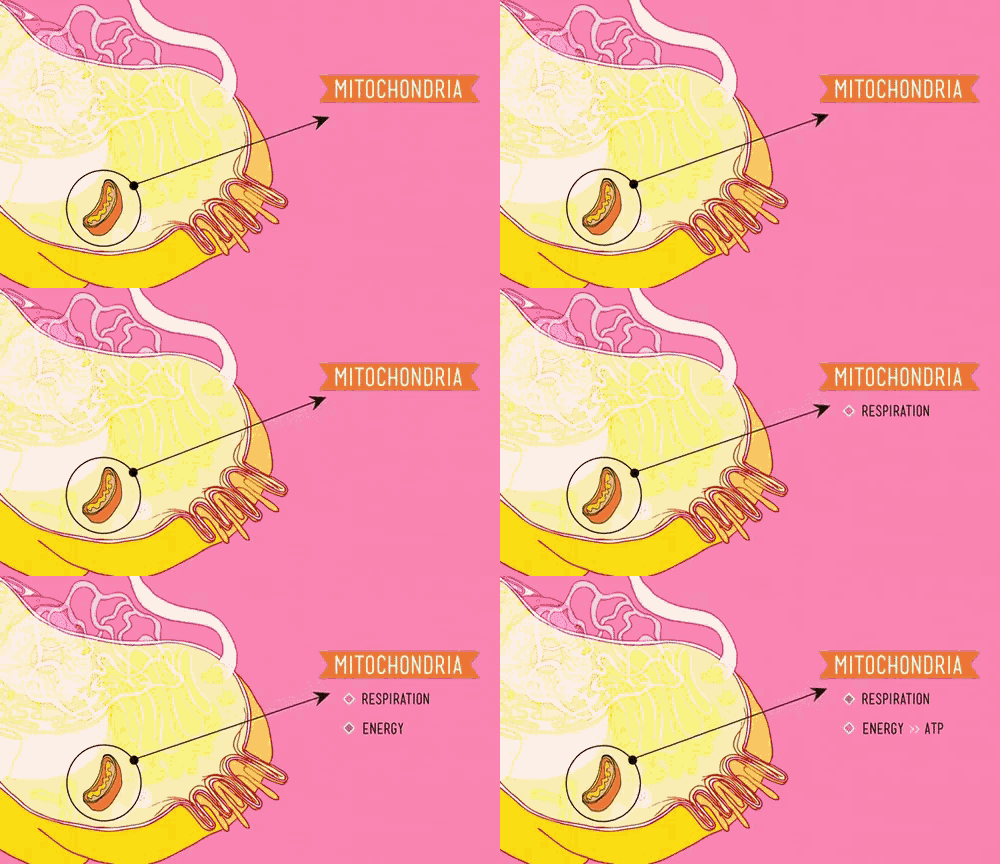
Do you remember mitochondria’s role in endosymbiosis?
Mitochondria were the first organelle to give us a clue that alluded to their external or alien origin - from outside the eukaryotic cell. Their small size and simple mechanism of dividing was enough to convince Paul Portier in 1918 that they were bacterial cells lodged inside animal and plant cells.
And we are still learning about this incredible organelle - its evolution, its many cellular functions, and how its dysfunction impacts human health.
Often described as the “engine” of the cell, it is remarkable to consider mitochondria as “little bacteria” running the show inside every one of our cells.
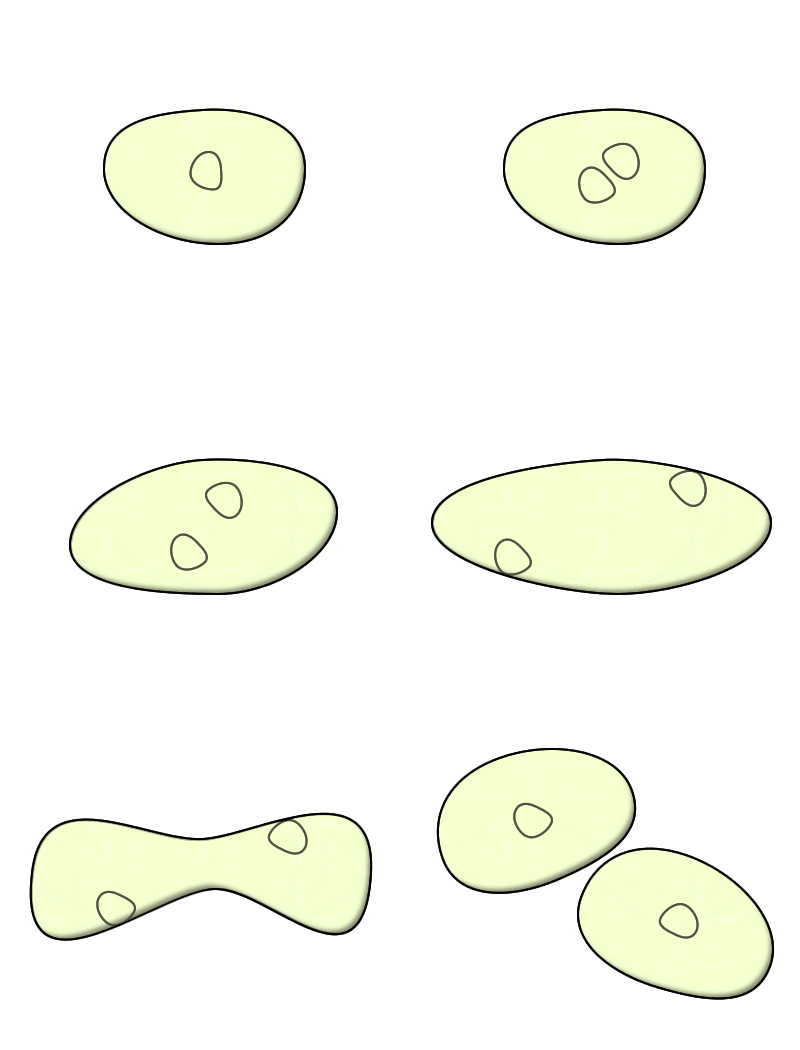
Bacterial binary fission
Replication in bacteria by binary fission
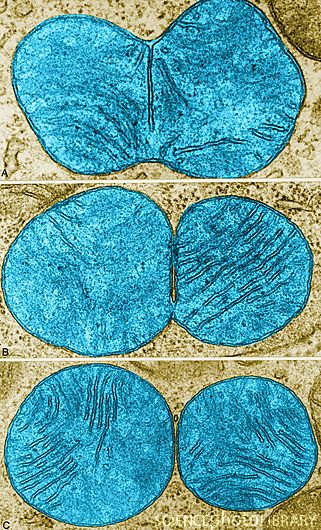
Mitochondrial division
Example of mitochondrial division under microscopy
Stages of mitochondrial division
How mitochondria fuse or divide when energy needs change
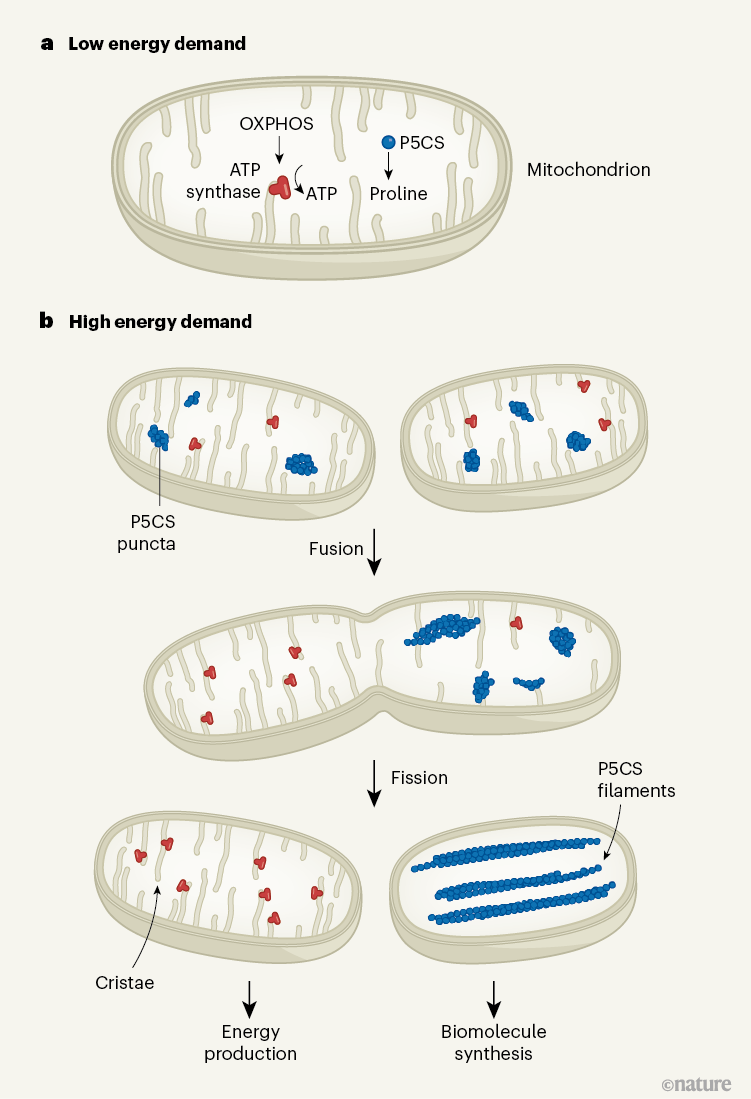
New research proposes that mitochondria may segregate into distinct subpopulations, with some specializing in generating ATP (energy storage) and others dedicated to different metabolic functions. This division of labor within the mitochondrial population offers a compelling explanation for how cells efficiently balance and manage diverse biochemical processes. Division of labour: mitochondria split to meet energy demands.
This concept of mitochondrial “division of labour” mirrors strategies seen in bacterial communities. In biofilms, for instance, genetically identical bacteria can differentiate into subpopulations with specialized roles: some cells focus on producing extracellular matrix, others on motility, while others may enter dormant states to ensure community survival under stress. Similarly, in microbial colonies or mixed consortia, different members - or even subgroups of the same species - partition metabolic functions, sharing resources and coordinating to maximize overall fitness.
Seen through the lens of endosymbiosis, mitochondria can be understood as bacterial descendants that retained this adaptive strategy of functional specialization. Just as bacterial collectives optimize survival by diversifying roles within a community, mitochondria within a single cell appear to diversify into energy-producing and non-energy-producing populations to maintain cellular homeostasis.
Found in almost every nucleated cell, these membrane-bound aliens provide their host cell with abundant energy through oxidative phosphorylation.
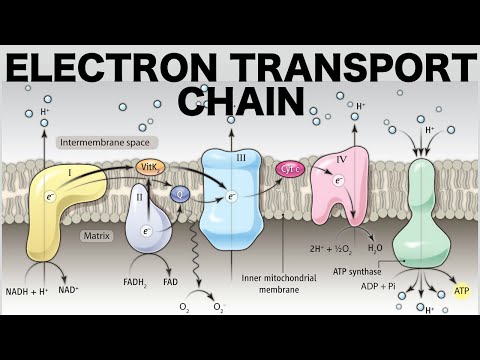
Because of mitochondria, all Earthly beings made of nucleated cells-including us-share remarkably similar metabolisms.
Apart from plants and algae (which use photosynthesis, like cyanobacteria), all eukaryotic metabolism is fundamentally the same.
We are extremely indebted to mitochondria for aerobic respiration. They produce enough ATP for themselves and the rest of the cell.
Examining cells through the lens of endosymbiosis
Endosymbiosis (proposed by Lynn Margulis) is widely accepted, with symbiogenesis as its mechanism. Endosymbiosis is where a single-celled organism resides within another cell as part of a mutually beneficial relationship [1].
Prokaryotic vs. Eukaryotic
- Prokaryotes lack a nucleus.
- Prokaryotes are usually single-celled organisms such as bacteria.
- Eukaryotes contain a more complex composition of organelles (mitochondria in animals, chloroplasts in plants).
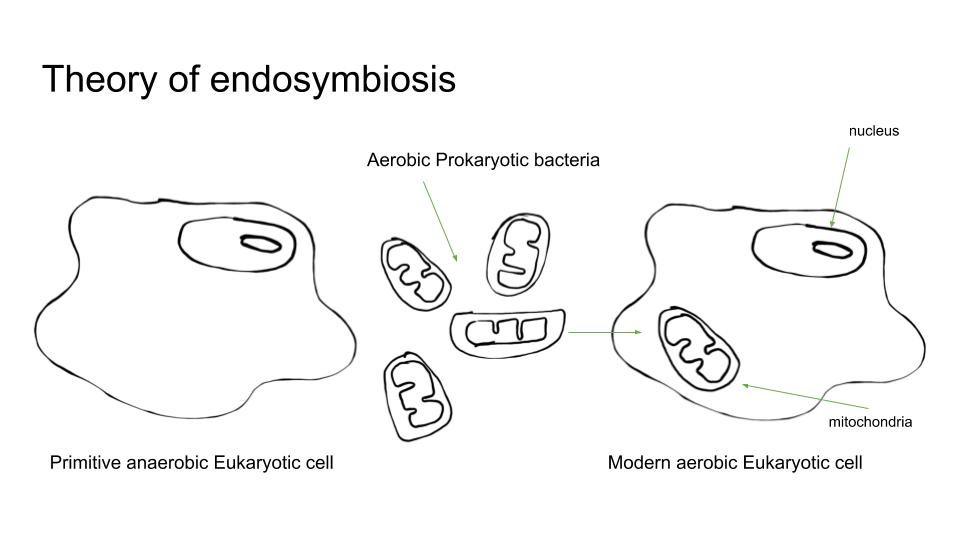
Key ideas:
- A cell can be seen as a collection of semi-autonomous bodies.
- Many organelles may have originated as external units of life that were since incorporated.
- Multicellular organisms represent an integration of initially independent units or organelles.
Bacterial empires – selfish or symbiotic?
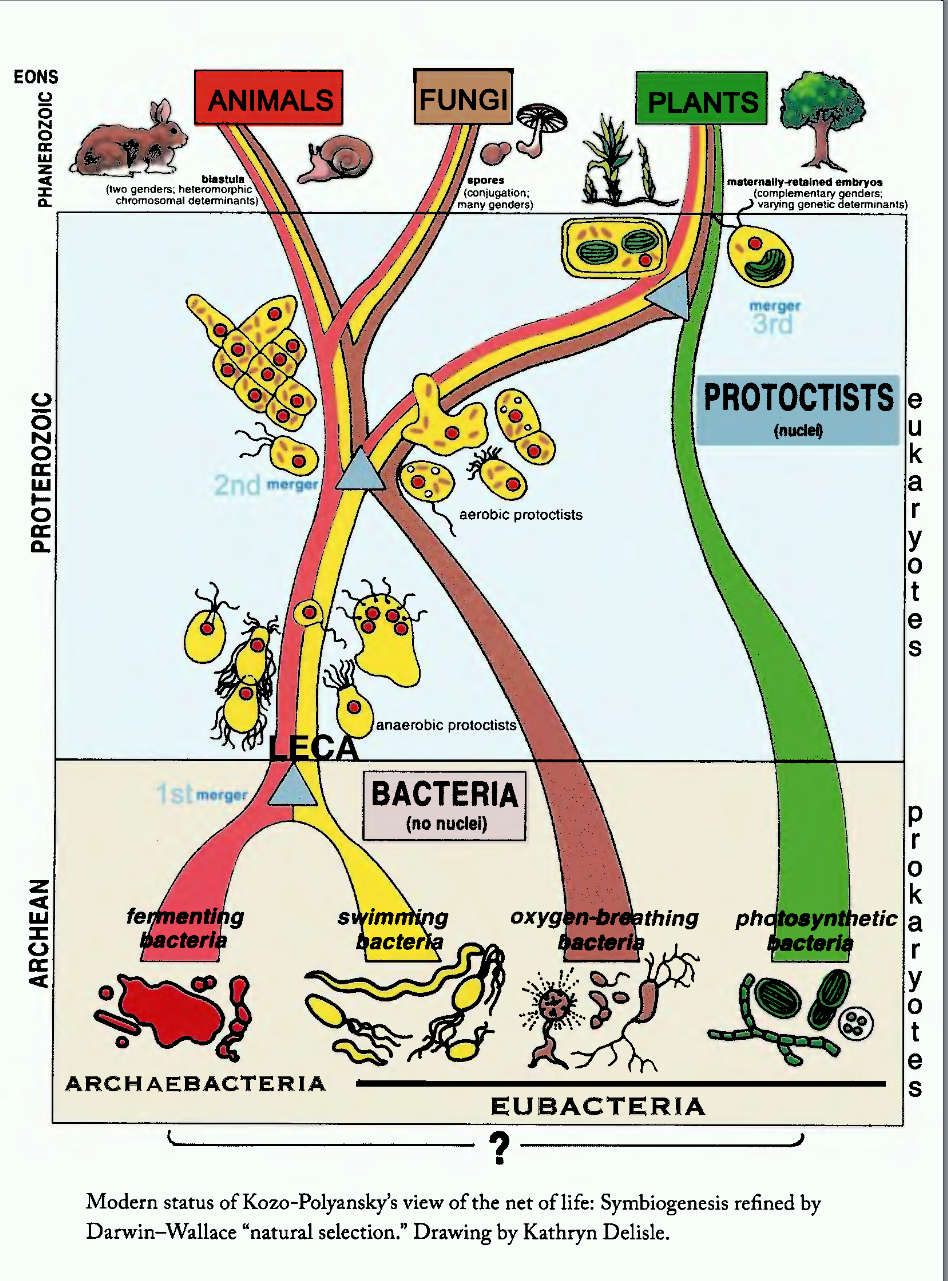
From Symbiogenesis: A New Principle of Evolution
Picture the Earth 3 billion years ago. Life was autopoietic, omnipotent, and bacterial. These microbes never left-they live in our guts, in plant roots, and as symbionts in countless organisms.
Darwinian evolution emphasizes survival of the fittest, but cooperation, altruism, and parasitism are also central to natural law.
Types of interaction:
- Altruism – conscious mutual assistance
- Commensalism – one partner takes what the other does not need
- Mutualism – mutual exploitation
- Parasitism – one exploits the other
- Domatism – one uses another for shelter
Lynn Margulis

Lynn Margulis, evolutionary microbiologist, promoted symbiogenesis as a mechanism for evolution.
- Introduced to her work via Conner Habib’s podcast.
- Key books: Microcosmos and Symbiogenesis: A New Principle of Evolution.
What is symbiogenesis?
Symbiogenesis = new organisms emerge through union of heterogeneous organisms:
- Two or more organisms combine.
- The result is more complex than either alone.
- The new composite contains multiple genomes (“symbioma”).
- Components may move, disappear, or modify.
Life before cells
- Bioblasts - units of life (e.g., mitochondria) without nuclei. Bioblasts info
- Cytodes - flagellated cells (e.g., sperm).
- Cyanobacteria - oxygenic photosynthesizers.
Chloroplasts

Plastids (chloroplasts):
- Have their own DNA and RNA
- Ribosomes same size as bacteria
- Double membranes
- Divide like bacteria
- DNA/RNA/proteins resemble cyanobacteria
Just as mitochondria are believed to have originated from a free-living bacterium that took up residence inside an ancestral eukaryotic cell, chloroplasts are thought to trace back to ancient cyanobacteria. These photosynthetic bacteria were engulfed but not digested, forming a mutually beneficial relationship: the host cell provided protection and nutrients, while the cyanobacteria contributed the powerful ability to capture light energy and convert it into chemical energy. Over time, these once-independent organisms became fully integrated as chloroplasts - the “solar panels” of the plant cell - making photosynthesis possible in plants and algae.
Prochloron – the missing link bridging the gap between bacteria and chloroplasts

Discovered in the late 1950s, Prochloron is a photosynthetic bacterium that lives in close symbiosis with sea squirts (marine tunicates). Its discovery was surprising because it blurred the lines between bacteria and plants.
Structurally, Prochloron is unmistakably bacterial - lacking a nucleus, small in size, and with a simple prokaryotic cell plan. Yet metabolically it looks strikingly like a plant cell: it contains both chlorophyll a and b, the same pigments that plants use for photosynthesis. This sets it apart from cyanobacteria, which only use chlorophyll a, meaning it represents the closest thing we have to an ancestral chloroplast.
Because of this dual identity, Prochloron has long been considered a model for the evolutionary transition from cyanobacteria to chloroplasts. It shows how a bacterium could bring photosynthetic machinery into a host cell, laying the groundwork for the eventual emergence of plastids in plants and algae.
What’s more, sea squirt larvae sometimes inherit packets of Prochloron from their parents, ensuring that the symbiosis is passed on across generations - a fascinating echo of how endosymbionts like mitochondria and chloroplasts became permanent residents inside eukaryotic cells.
In many ways, Prochloron represents a living reminder of the evolutionary handshake that turned free-living bacteria into the energy factories of modern plants.
The big picture
- Mobile nuclei and bacteria can move between species, transferring their functions along with them.
- The engulfment of free-living bacteria gave rise to mitochondria (aerobic metabolism) and chloroplasts (photosynthesis).
- Symbiogenesis provides an additional evolutionary mechanism alongside Darwinian mutation and natural selection.
References
- Endosymbiosis – ScienceDirect
- Margulis, Lynn, and Dorion Sagan. Microcosmos: Four billion years of microbial evolution. Univ of California Press, 1997. Goodreads
- Kozo-Polyansky, B.M., Symbiogenesis: A New Principle of Evolution. Harvard University Press, 2010. Amazon
- Aanen, D.K., and Eggleton, P. Symbiogenesis: Beyond the endosymbiosis theory? J Theor Biol 434 (2017): 99–103. ScienceDirect
- Cover art: Odranoel